The Aluminum Tube is available in dozens of alloys, tempers, and cross‑sectional geometries. For construction, 6061‑T6 is the workhorse: weldable, machinable, and strong enough for structural glazing systems. For aerospace, 7075‑T73 offers the highest strength‑to‑weight ratio and exceptional fatigue resistance. For consumer goods, 3003 or 5052 alloys provide excellent formability for decorative and lightweight applications. What all these variants share is a common starting point: an extrusion, a drawn shell, or a coiled strip that feeds into a forming line.
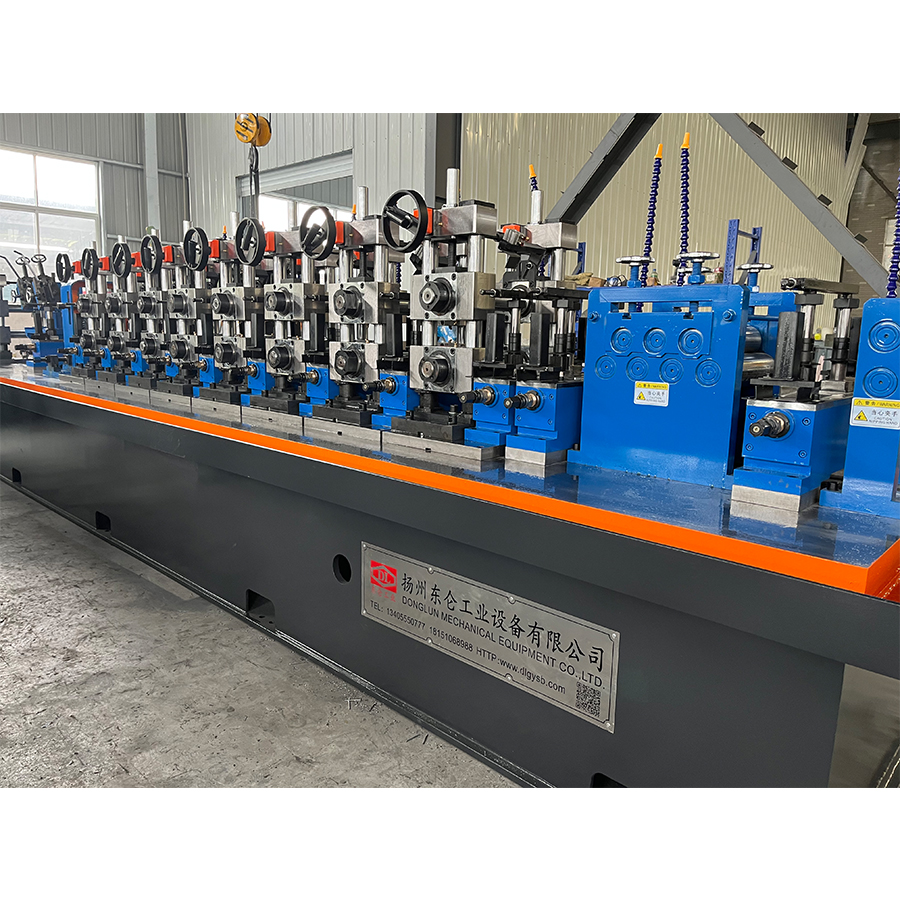
Producing these tubes at industrial scale often relies on equipment originally developed for steel. The Steel Tube Mill Machine, when adapted with carbide forming rolls and emulsion cooling systems, can produce welded aluminum tubes from strip stock at speeds of 30–50 m/min. The forming section gradually bends the strip into a tubular shape, and the seam is welded using high‑frequency induction—though for aluminum, the welding parameters are carefully adjusted to avoid porosity and ensure consistent fusion. After welding, the tube passes through sizing stands that calibrate its outside diameter to within ±0.1 mm. One major Asian manufacturer reported that by modifying their steel tube mills for aluminum, they were able to launch a new product line for furniture tubing within six months, without investing in entirely new machinery.
For structural sections that do not require welding—such as architectural profiles with complex hollows—the Roll Forming Machine is the preferred tool. Unlike tube mills that form closed sections, roll forming machines use progressive dies to bend flat strip into open shapes like channels, angles, and custom profiles. For aluminum, the forming process is even more attractive than for steel because aluminum's lower yield strength allows tighter bends and finer features without spring‑back issues. A roll forming line can produce continuous lengths of aluminum tube profiles with integrated snap‑fit features or decorative grooves, eliminating secondary machining operations. One architectural fabricator used a roll forming machine to produce 10,000 linear metres of a custom aluminum tube profile for a high‑end office tower's rain‑screen cladding system—completing the job in 14 working days.
The environmental case strengthens the value proposition. Aluminum is infinitely recyclable, and the scrap generated during tube milling and roll forming is collected and sent back to smelters. Many mills now operate closed‑loop systems where production waste never leaves the facility. As one sustainability officer from a European construction materials firm noted, "We choose aluminum tubes not just for their performance, but because every tonne of recycled aluminum saves nine tonnes of CO₂ compared to primary production. That aligns with our net‑zero commitments."
From skyscrapers to spacecraft, from kitchen utensils to medical equipment, the aluminum tube is a silent enabler. And with modern steel tube mills and roll forming machines adapted to handle it, the material's versatility is limited only by the designer's imagination. One material, infinite uses—and the tooling to make it all possible is already on the factory floor.