The modern Aluminum Tube used in precision hydraulic systems is not the soft, easily scored material of the past. Through multiple cold‑drawing passes with intermediate annealing, manufacturers can achieve dimensional tolerances of ±0.02 mm on the inside diameter and ±0.05 mm on wall thickness—comparable to what high‑end steel tubing offers, but at one‑third the weight. The surface finish inside the bore reaches Ra 0.4 μm, which reduces friction and allows for higher operating speeds without seal damage. A German cylinder manufacturer that switched from steel to precision‑drawn aluminum tubes for their mobile hydraulic cylinders reported a 55 % reduction in cylinder weight, which translated into better fuel economy for the excavators and forklifts they supplied.
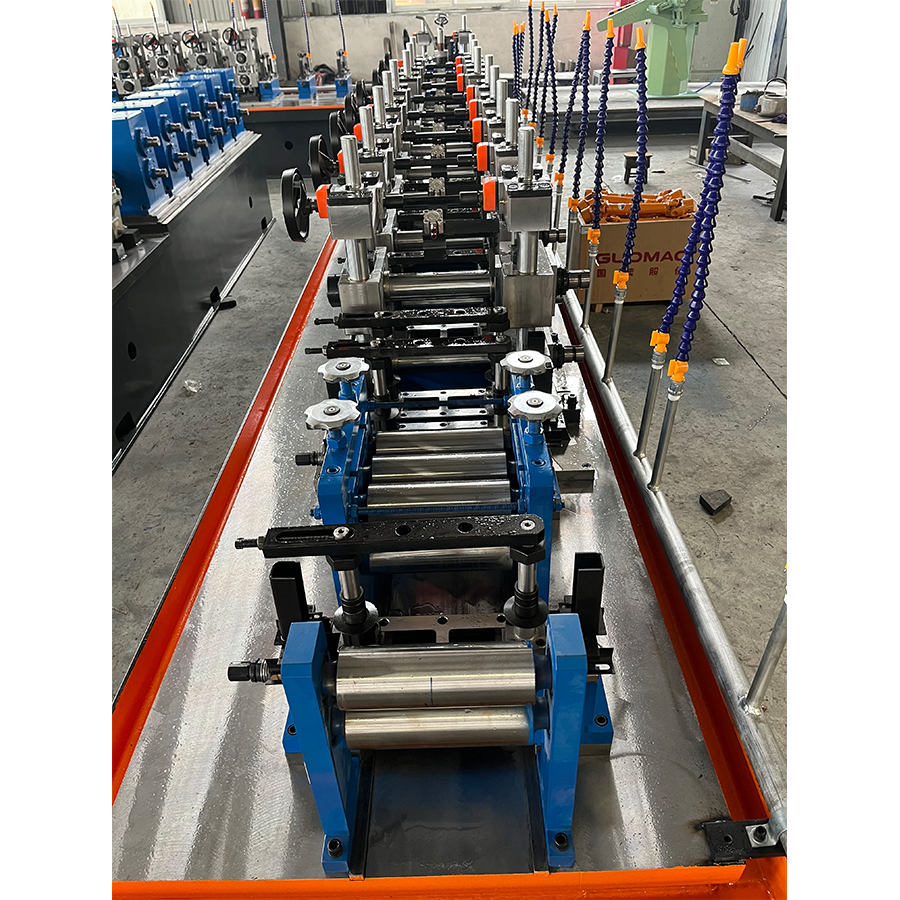
Achieving such tight tolerances in aluminum requires equipment that is often associated with steel production. The Steel Tube Mill Machine, traditionally used to form and weld steel strip into continuous tubing, has been adapted with modified roll stands and cooling systems to handle aluminum. The forming section of the mill is tuned to run at lower speeds—typically 15 to 25 m/min versus 60 m/min for steel—to prevent galling and maintain surface integrity. The welding station is bypassed because aluminum hydraulic tubes are usually produced as seamless, starting from extruded hollow shells rather than welded strip. However, the same milling and sizing stands that straighten and calibrate steel tubes are repurposed to perform the initial sizing passes on aluminum, ensuring roundness before the drawn bench takes over.
Once the tube exits the mill, it moves to the drawing bench, where the Pipe Roller system plays a crucial role. Pipe rollers are the sets of driven and idler wheels that guide the tube through the drawing die and maintain its alignment. In aluminum drawing, the rollers must be smooth—often coated with tungsten carbide or ceramic—to avoid imprinting any surface marks on the soft metal. They also need precise tension control; if the feed rollers pull too hard, the tube stretches unevenly; if they are too loose, the material accumulates and buckles at the die entrance. A well‑tuned pipe roller system can reduce drawing force fluctuations by 30 %, resulting in more consistent wall thickness across long production runs.
The economic benefits of precision aluminum tubes extend beyond weight savings. Aluminum's natural oxide layer provides excellent corrosion resistance, eliminating the need for internal coatings or rust‑proofing. And because aluminum is easier to machine than steel, secondary operations like port drilling and end forming can be performed faster, cutting overall component costs by 15–20 %. As one senior design engineer from an Italian agricultural machinery manufacturer put it, "We used to specify steel because we trusted the tolerance. Now we specify aluminum because we trust the tolerance and we get a lighter, rust‑free cylinder for the same price."
The combination of advanced tube mills, precise roller systems, and multi‑pass drawing has turned aluminum from a lightweight novelty into a genuine contender for high‑pressure fluid power applications. For any engineer calculating the mass budget of a mobile system, the precision‑drawn aluminum tube is not a compromise—it is an upgrade.