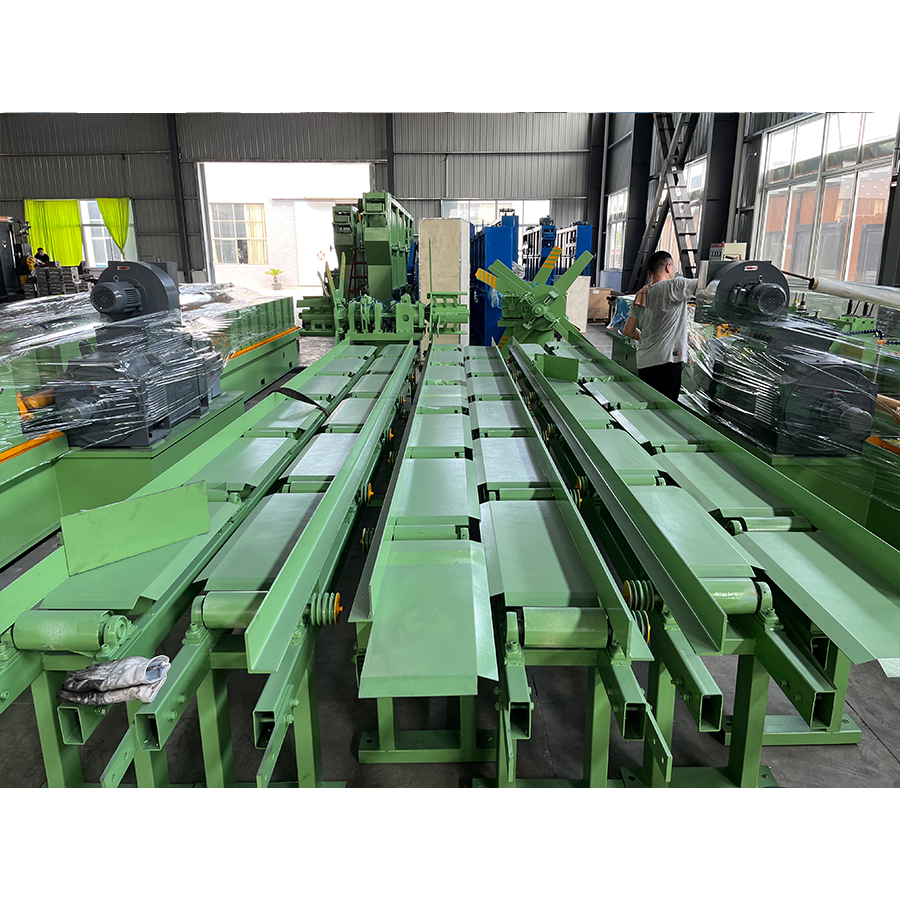
A heavy‑equipment manufacturer in Turkey has introduced a run out table designed specifically for this brutal environment. Their new unit uses a forced‑air cooling system that channels high‑velocity airflow through hollow rollers and beneath the table's deck, extracting heat continuously rather than allowing it to soak into the structure. The cooling system operates on a closed‑loop control, adjusting airflow based on the billet temperature and line speed. In trials at a rebar mill, the air‑cooled table maintained its frame temperature below 120°C even while handling 200‑mm square billets at 850°C surface temperature—well within the structural steel's safe operating range.
The table's rollers are cast from heat‑resistant alloy steel with a waffle‑pattern surface that improves traction while allowing air to circulate around the billet's underside. This design reduces the thermal gradient across the roller surface, minimizing the heat checking and surface cracking that typically forces roller replacement every three to four months. The mill operating the trial reported that the first set of rollers lasted 14 months—a 300% increase over their previous units.
The run out table doesn't operate in isolation. In a modern mill, it's one piece of a broader network of Auxiliary Equipment that includes shears, cooling beds, and bundling stations. The table's cooling system is integrated with the mill's central PLC, coordinating its airflow with the finisher's speed and the cooling bed's cycle timing. This synchronization prevents the common problem of billets stacking up on a table that's moving too slowly—a failure that often damages both the product and the rollers.
This heavy‑duty table sits upstream from lighter, precision‑oriented equipment like the Roll Forming Machine, which takes cooled and straightened sections and shapes them into complex profiles for construction and automotive applications. The roll forming machine can't handle the heat—its tooling would lose temper and its bearings would fail—but it relies on the run out table to deliver straight, unscaled material that hasn't been deformed by uneven cooling. One German manufacturer that installed the new table reported that its downstream roll forming reject rate dropped from 4.2% to 1.1%, simply because the billets arrived at the forming station with consistent straightness and surface quality.
Interestingly, the same forced‑air cooling principle used in the run out table is being applied to Aluminum Tube extrusion lines, though with much lower temperatures. In aluminum mills, the cooling table serves a different function—rapidly quenching the extruded tube to lock in the metallurgical properties. The same roller and airflow technology has been adapted, substituting heat‑resistant alloys with corrosion‑resistant materials that handle aluminum's chemical reactivity.
For the steel mill operator, the new run out table represents a shift in maintenance philosophy. Instead of budgeting for quarterly roller swaps and annual frame straightening, the mill can now plan for a roller change every 14 months and an annual inspection of the air ducts. The forced‑air system's compressor and chiller add complexity, but the mill's maintenance chief made the case plainly: "We're trading 12 roller changes a year for one. I'll take that trade every time."