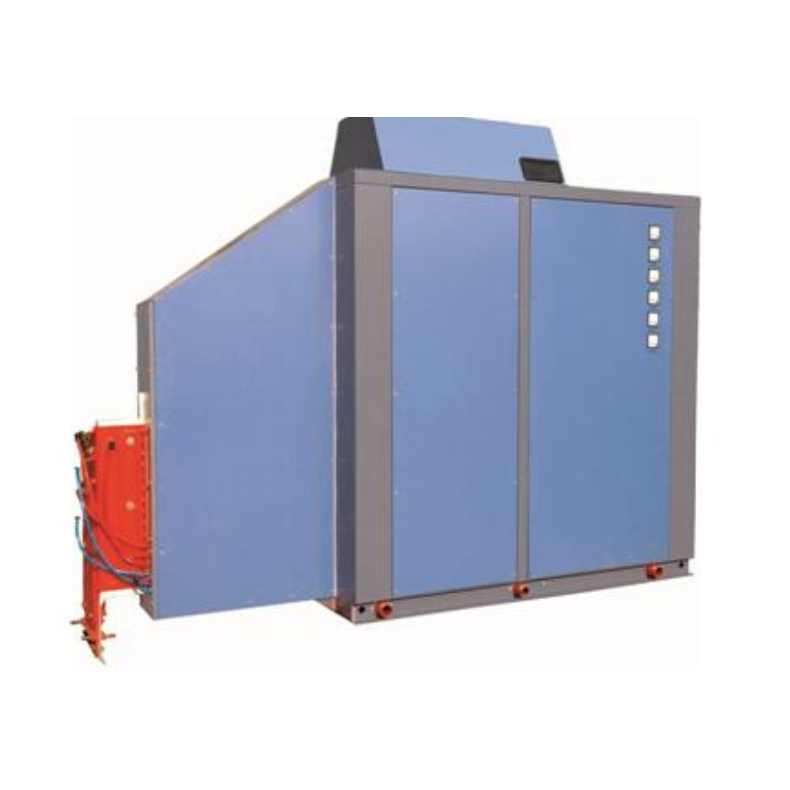
The gap in sealing speed between high-frequency welding and conventional heat-sealing methods continues to widen, as manufacturers across industries report productivity gains that directly impact production economics. High-frequency welding machines can operate at speeds of 5 to 15 meters per minute, increasing efficiency by three to five times compared to traditional hot air gun welding or adhesive-based approaches.
The principle behind this speed advantage lies in how the two technologies generate heat. Traditional heat sealing relies on external heat sources that must transfer energy through the material surface, a process constrained by thermal conductivity and often requiring preheating or extended dwell times. High-frequency welding, by contrast, uses electromagnetic waves to generate heat internally within thermoplastic materials, fusing them from the inside out. This volumetric heating eliminates the waiting time for heat to penetrate, enabling cycle times that are significantly shorter than other techniques.
In tube manufacturing, the efficiency gains are particularly pronounced when high-frequency welding is paired with roll forming machines. The typical production sequence begins with a flat metal strip fed into a roll forming section, where a series of forming rolls progressively bend the strip into a tubular shape. The open seam then passes through the high-frequency welding section, where induced current heats the edges to forging temperature before weld rollers fuse them under pressure. This continuous, in-line process—roll forming followed immediately by high-frequency welding—eliminates the handling and repositioning steps that plague batch-based heat-sealing operations.
The result is a streamlined production line capable of turning coils of aluminum or steel into finished welded tube at speeds that traditional methods cannot match. For aluminum tube applications—including HVAC components, automotive assemblies, and heat exchanger systems—the combination of roll forming and high-frequency welding delivers not just speed but also consistency. Manufacturers report fewer rejected parts, lower material waste, and faster cycle times.
As production lines become more automated and throughput demands intensify, the speed delta between high-frequency welding and traditional methods is becoming a competitive differentiator. The question for many manufacturers is no longer whether to adopt the technology, but how quickly they can integrate it.