The construction industry is witnessing a steady shift toward aluminum tubes as architects and structural engineers seek materials that balance performance with sustainability. Global aluminum systems market, which encompasses tubes, profiles, and related components, grew from $169.47 billion in 2025 to $180.78 billion in 2026, reflecting a compound annual growth rate of 6.7%, with further expansion to $235.78 billion projected by 2030. The building and construction segment alone accounts for 54.43% of the aluminum-extruded products market.
The material's appeal lies in its physical properties. Aluminum weighs roughly one-third as much as steel while offering excellent corrosion resistance and a high strength-to-weight ratio. Its natural oxide layer eliminates the need for rust-preventive coatings, making it particularly suitable for coastal buildings and offshore platforms. In green building applications, aluminum supports sustainability through full recyclability—75% of all aluminum ever produced remains in use today—and a recycling process that consumes 95% less energy than primary production. A recent study comparing life-cycle costs found that while aluminum has a 30.8% higher initial cost than anti-corrosion coated steel, its life-cycle cost is 35.7% lower.
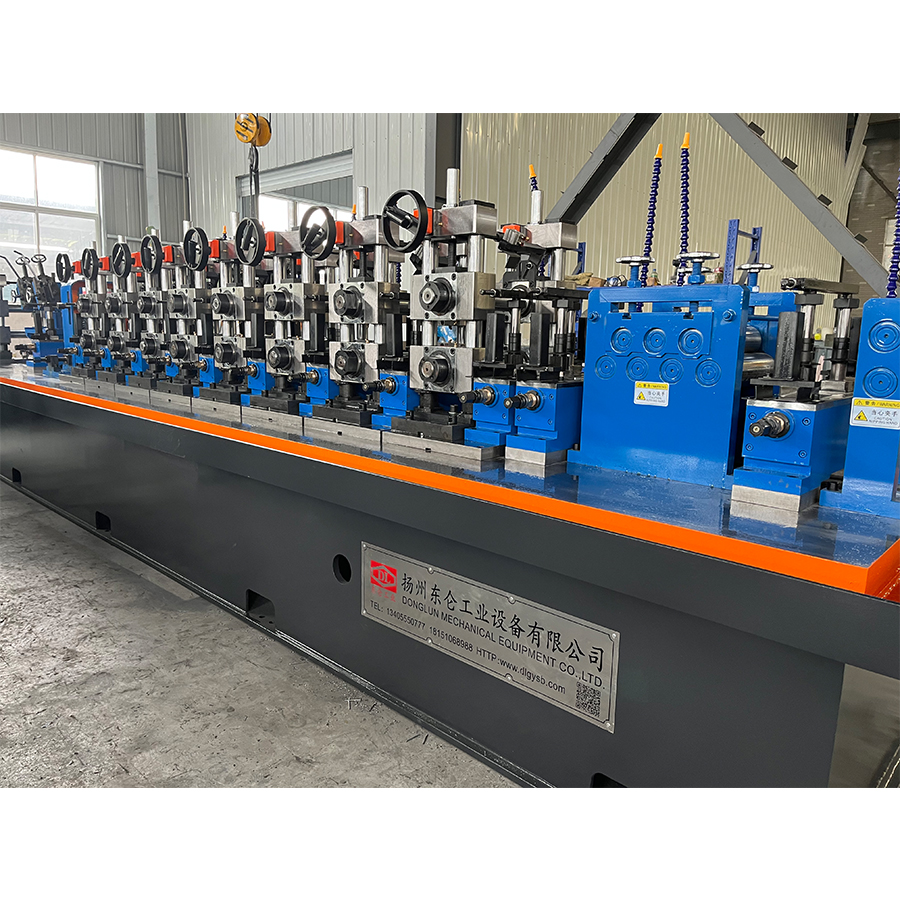
This growing demand has put pressure on production equipment to adapt. Steel tube mill machines, traditionally configured for ferrous materials, are increasingly being retrofitted or redesigned to handle aluminum strips. A tube mill machine processes flat metal coils through a series of forming rolls that progressively bend the strip into a round or shaped tube. The roll forming machine—the core component of any tube mill—must be calibrated differently for aluminum than for steel: aluminum's lower modulus of elasticity requires tighter roller clearances and more precise speed control to prevent buckling or surface marking. Production speeds for aluminum tubes can reach up to 120 meters per minute on modern cold roll forming lines.
From structural framing and curtain walls to roof trusses and modular buildings, aluminum tubes are displacing traditional steel in an expanding range of applications. The combination of high strength-to-weight ratio, corrosion resistance, and recyclability aligns with the rising adoption of green building standards and the growing demand for sustainable construction materials. As production equipment continues to evolve to accommodate aluminum's unique characteristics, the material's footprint in the construction sector is likely to expand further.