Independent third-party tests have confirmed that next-generation high-speed extrusion technology can shorten aluminum tube production cycles by 28%, validating what early adopters have been reporting across pilot lines in Asia and Europe.
The tests, conducted by a German materials testing institute, compared conventional hot extrusion setups against systems incorporating advanced isothermal control, friction-assisted forming, and real-time process optimization. The results were decisive: cycle times dropped from an average of 7.2 minutes per billet to just over 5 minutes, while maintaining dimensional tolerances within ±0.05mm. Scrap rates, a persistent cost driver in tube manufacturing, fell from roughly 5% to under 1.2%.
The technology hinges on several interrelated upgrades. Isothermal extrusion maintains consistent metal flow through dynamic ram speed adjustments—0.5 to 15mm/s based on thermal imaging feedback—reducing grain structure variation by 40%. Friction-assisted techniques cut energy consumption by up to 35%. Perhaps most critically for job shops, quick-change die systems have reduced changeover times from four hours to 45 minutes, eliminating the setup bottlenecks that traditionally eat into production windows.
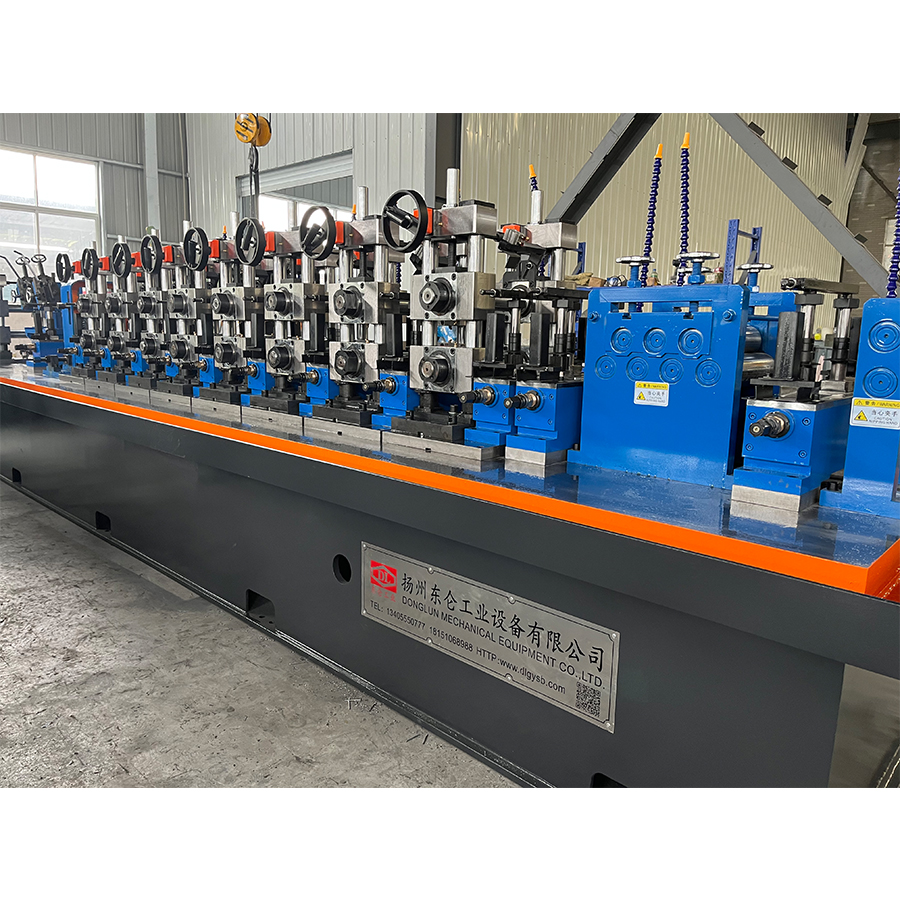
The implications extend beyond the extrusion press itself. Downstream pipe roller sections, which size and straighten extruded tubes, have been redesigned to handle higher throughput without sacrificing surface quality. Modern roller configurations reduce friction during sizing, minimize marking, and extend roller life—critical for high-volume runs where roller wear directly impacts both quality and downtime.
For manufacturers running steel tube mill machine lines alongside aluminum production, the flexibility is particularly attractive. The same high-speed extrusion platform can be retooled for aluminum tubes with interchangeable roller sets and adjusted welding parameters. This versatility allows tube mills to shift between materials without major capital expenditure.
With global aluminum tube demand projected to grow steadily through 2030—driven by automotive lightweighting, HVAC systems, and renewable energy infrastructure—a 28% cycle reduction translates directly into capacity gains without additional floor space or press investment. For production planners watching capacity constraints, that arithmetic is hard to ignore.