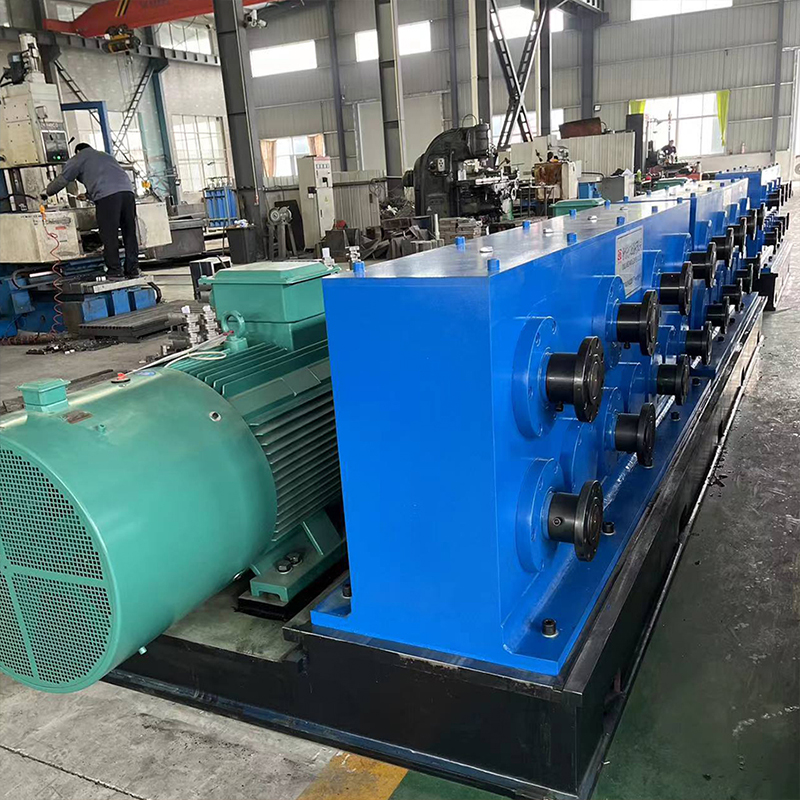
At the core of the breakthrough is a redesigned drive train that eliminates the energy losses inherent in conventional gearbox systems. Direct-drive servo motors with integrated encoders provide instantaneous torque response while consuming 22% less electricity than hydraulic counterparts. The precision is equally impressive: positioning accuracy within ±0.1 millimeters, even at forming speeds exceeding 250 feet per minute. One early adopter reported reducing scrap rates from 4.2% to 1.1% within the first month of operation—a direct result of tighter tolerances and consistent material tracking.
The machine's intelligence is what truly sets it apart. Integrated sensors monitor material thickness, temperature, and feed alignment in real time, making micro-adjustments to roller gaps and speeds without operator intervention. When the system detects a deviation, it compensates instantly, preventing downstream defects before they occur. This closed-loop control architecture is particularly valuable when processing materials with variable properties—such as Aluminum Tube applications where material temper and surface condition fluctuate between batches. The system self-adapts to each coil, eliminating the manual setup time previously required for material changes.
The economic case is compelling. Reduced energy consumption, lower scrap rates, and faster changeovers combine to deliver an average payback period of 18 months for installations operating two shifts daily. Maintenance requirements have also decreased: sealed bearing housings and centralized lubrication points extend service intervals by 300%, reducing both downtime and labor costs.
For buyers evaluating new equipment, the decision framework has shifted. The latest generation of Steel Tube Mill Machine platforms incorporates the same servo-driven, sensor-integrated technology, creating a unified equipment ecosystem. Fabricators that process both sheet and tube can standardize on a common control interface and spare parts inventory, simplifying training and reducing capital lock-up.
The message to procurement professionals is unambiguous. Faster forming speeds no longer require sacrificing quality. Energy efficiency is not achieved at the expense of throughput. And machine intelligence is no longer a premium add-on—it is a baseline expectation. In today's margin-sensitive manufacturing environment, the choice of roll forming technology is increasingly the difference between competitive advantage and competitive disadvantage.
When the machines get smarter, the economics get simpler. That is the breakthrough that matters.