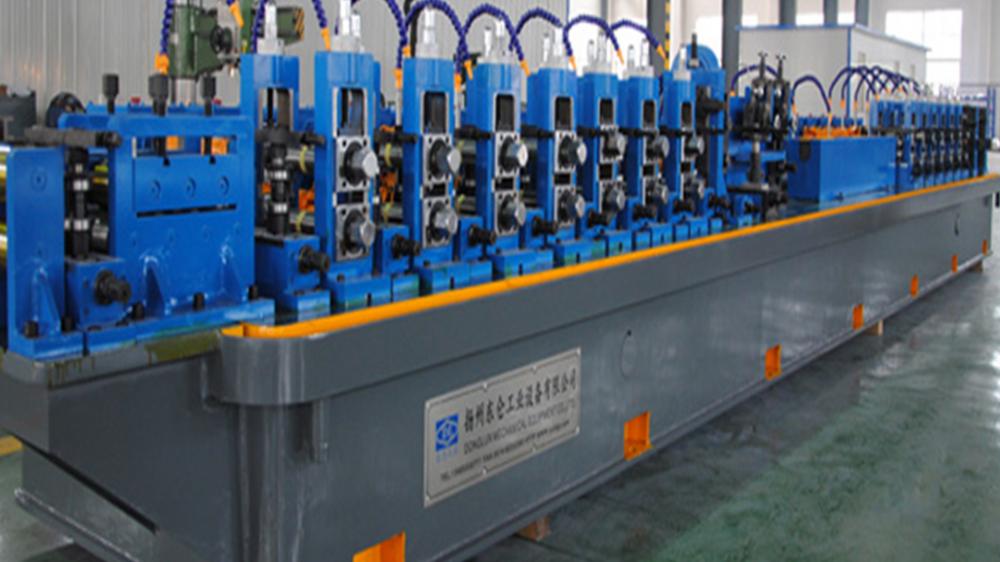
Orders for these heavy-duty forming systems have climbed 35% year-over-year, driven primarily by solar tracker frameworks and wind turbine support structures. Unlike conventional construction tubing, renewable applications demand tighter tolerances, higher yield strengths, and corrosion-resistant finishes—specifications that push older mill designs to their limits. Manufacturers are responding with next-generation tube mills capable of processing high-strength low-alloy steels at speeds exceeding 200 feet per minute while maintaining wall thickness variations under 0.005 inches.
The shifting material palette adds another layer of complexity. While steel remains dominant for primary load-bearing components, the surge in lightweight structural applications has propelled Aluminum Tube into the spotlight. Solar panel mounting rails, drone-delivered construction elements, and portable shelter frames increasingly specify aluminum for its strength-to-weight advantage. Modern tube mills now feature rapid-change tooling systems that switch between steel and aluminum within 45 minutes—a capability that was unthinkable a decade ago.
But the most significant bottleneck isn't the tube itself. It is the Pipe Roller technology that feeds, guides, and shapes the material through successive forming stations. Precision-ground rollers with diamond-patterned surfaces prevent slippage on smooth aluminum surfaces, while hardened steel rollers with ceramic coatings extend tool life when processing abrasive high-strength steels. Smart roller systems now incorporate pressure sensors and laser measurement feedback, automatically adjusting roller gaps in real-time to compensate for material spring-back and thermal expansion.
Supply chain realities are catching up. Lead times for custom tube mill configurations have stretched from 16 weeks to over 30 weeks, forcing fabricators to place orders well ahead of project schedules. Meanwhile, manufacturers are investing heavily in modular mill designs that allow incremental capacity expansion without full system replacement.
The message is clear: renewable energy is not just greening the grid. It is forging a new era for tube forming technology—and those who adapt fast will lead the charge.