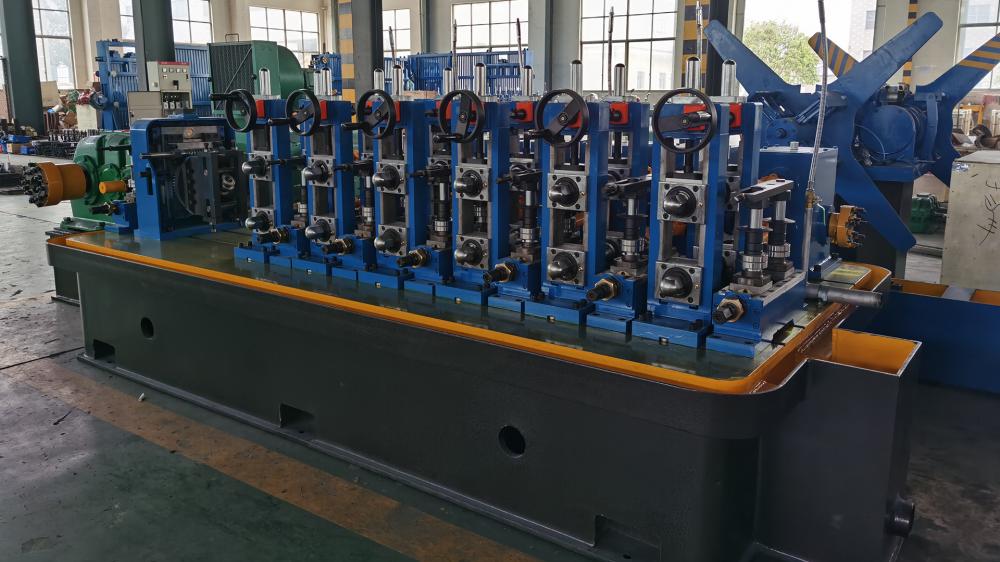
The Leap in Throughput
Conventional tube mills typically top out at 70–85 m/min for standard ERW pipe. The jump to 120 m/min comes from three technical upgrades: induction pre-heating before the forming section, closed-loop weld current regulation, and high-speed flying cut-offs that keep pace with the line without pausing production. At this speed, a single shift can produce over 750 tons of finished tube—enough to fill a standard rail car daily.
Scrap Reduction at Scale
What makes this performance genuinely valuable is the scrap rate. Conventional lines often run 2.5–3.5% scrap from end cropping, weld flash, and edge trimming. At 1.2%, the savings per ton become substantial. For a plant processing 500 tons per week, the reduction from 3% to 1.2% translates to about 9 tons less waste weekly—over 450 tons annually. At current steel prices, that is real money.
What Aluminum Tube Production Can Learn
The same high-speed forming principles are now being adapted for non-ferrous applications. Aluminum tube production, which typically runs slower due to material softness and surface protection requirements, is adopting similar roll forming machine architectures with modified roller materials and lubrication systems. Some dual-purpose mills now offer quick-change cassette systems that allow a single line to switch between steel tube and aluminum tube production within hours, not days.
Procurement Implications
For buyers, the investment case includes not just throughput but also reduced tooling wear. Hardened steel rolls with tungsten-carbide coating maintain profile accuracy longer, cutting regrind frequency and downtime. The new generation of steel tube mill machines is designed with modular roll stands that can be upgraded individually, protecting the capital investment as production demands grow.