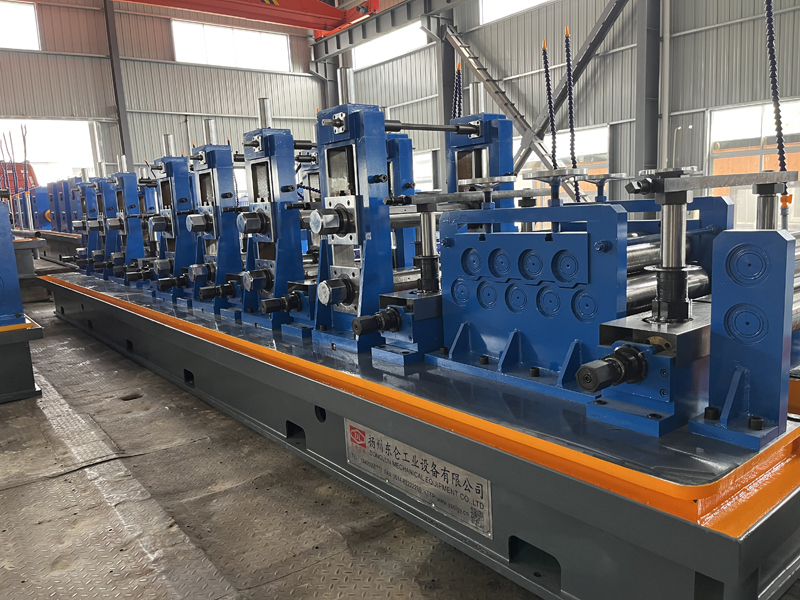
1. High-Speed Forming Reduces Energy Burn
Older mill lines run at 150–200 feet per minute. Modern servo-driven Steel Tube Mill Machine systems now achieve 350+ fpm with synchronized welding and sizing sections. This speed boost alone cuts per-ton energy consumption by 18–22%, while higher throughput spreads fixed overhead across more output.
2. Precision Welding Eliminates Rework
The integrated high-frequency welders with real-time current adjustment ensure consistent weld penetration. Scrap rates drop from 3-5% to under 1%, saving thousands of tons annually. This matters whether you're processing steel or Aluminum Tube—the latter's higher thermal conductivity makes precise heat control essential to avoid burn-through.
3. Quick-Change Tooling Slashes Downtime
Traditional changeovers take 4–6 hours. New modular cassette designs on modern Steel Tube Mill Machine lines reduce that to under 45 minutes. For job shops running multiple sizes daily, this translates to two extra production shifts per week.
4. The Roll Forming Connection
What many overlook is the upstream Roll Forming Machine integration. Modern mills pair forming stations with inline levelers that correct coil curvature before entry. This prevents "camber" defects and allows lighter-gauge material usage without compromising strength—directly lowering raw material cost per foot.
5. Smart Sensors Predict Breakdowns
Predictive maintenance systems now monitor vibration, temperature, and torque on every forming stand. Operators receive alerts before bearing failures or roll misalignment occurs, preventing catastrophic stops. One Midwestern tube producer reported 27% fewer unplanned outages after retrofitting their old Steel Tube Mill Machine with these sensors.
The Bottom Line for Buyers
When evaluating new Roll Forming Machine and mill investments, look beyond price. Calculate cost per ton over five years. Modern mills deliver lower scrap, faster speeds, and predictive uptime. The 30% savings figure isn't marketing—it's arithmetic. For plants still running 1990s-era equipment, the payback period often falls under 18 months.