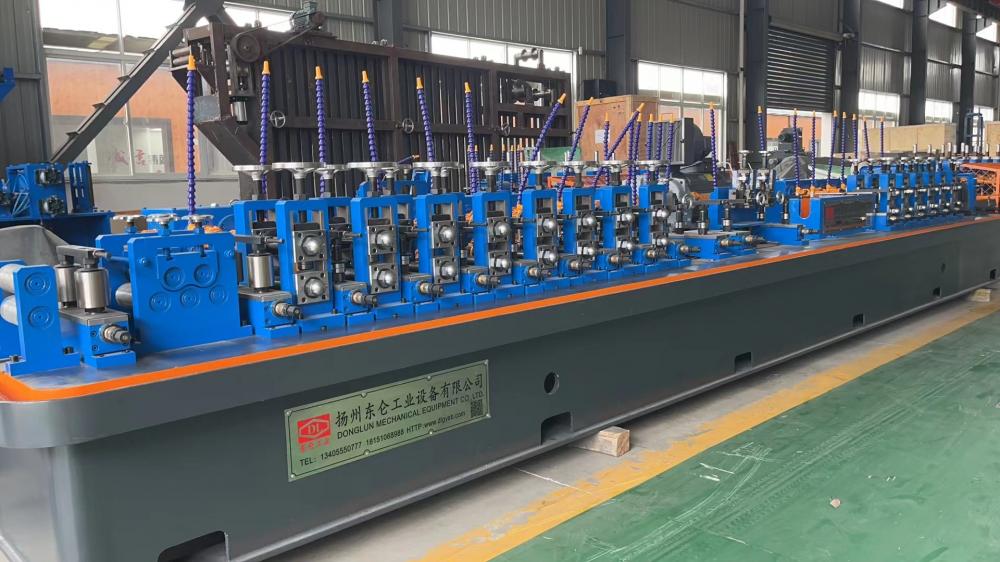
But after watching dozens of mills, I’ve learned that short roll life is usually a lubrication problem – not the rolls themselves.
Here are three lubrication mistakes that kill your steel tube mill machine rolls.
Mistake 1: Using the Same Oil for Steel and Aluminum
If your plant runs both steel and aluminum tube lines, you might be tempted to use one lubricant for everything. Don’t. Steel requires an oil with extreme-pressure (EP) additives – usually chlorine or sulfur compounds. Those same EP additives chemically attack aluminum. They stain the tube and corrode the rolls.
For aluminum tube, use a non‑staining, low‑viscosity synthetic oil. For steel, use a chlorinated or sulfurized EP oil. Keep them separate. Label your barrels clearly.
Mistake 2: Under‑Lubricating the Entry Guide
Most operators focus lubricant on the forming rolls and forget the entry guide. The entry guide is where the strip first contacts your steel tube mill machine. If it’s dry, the strip drags, work-hardens, and transfers that hardness to the first few forming rolls. Those rolls wear fast.
Apply a steady drip of lubricant directly onto the entry guide. The strip will carry it into the first forming section, protecting both guide and rolls.
Mistake 3: Over‑Lubricating the Fin Passes
The fin passes close the open tube before welding. Too much oil here creates a different problem – the oil doesn’t fully burn off in the weld box. Residual oil turns to carbon inside the weld zone, creating inclusions and forcing the roll forming machine section to work harder. Extra load means extra roll wear.
Cut lubricant flow to the fin passes to a bare minimum – just enough to prevent galling. Some mills run the fin passes almost dry with polished rolls.
Real‑World Result
A tube mill in Ohio was changing rolls every 10 days. An audit showed they were using the same vegetable‑based lubricant for everything – steel, aluminum, and copper. They switched to EP oil for steel and synthetic for aluminum. Roll life jumped to 6 weeks. The aluminum tube line stopped getting black stains.
One More Check
Look at your roll forming machine stands. If lubricant is pooling on the floor, you’re using too much. The right amount leaves a thin, even film – no drips, no puddles.
Your steel tube mill machine rolls don’t have to be disposable. Match lubricant to material, feed the entry guide, and cut back on the fin passes. Your rolls will last, your tube will look better, and your tooling budget will stop bleeding.