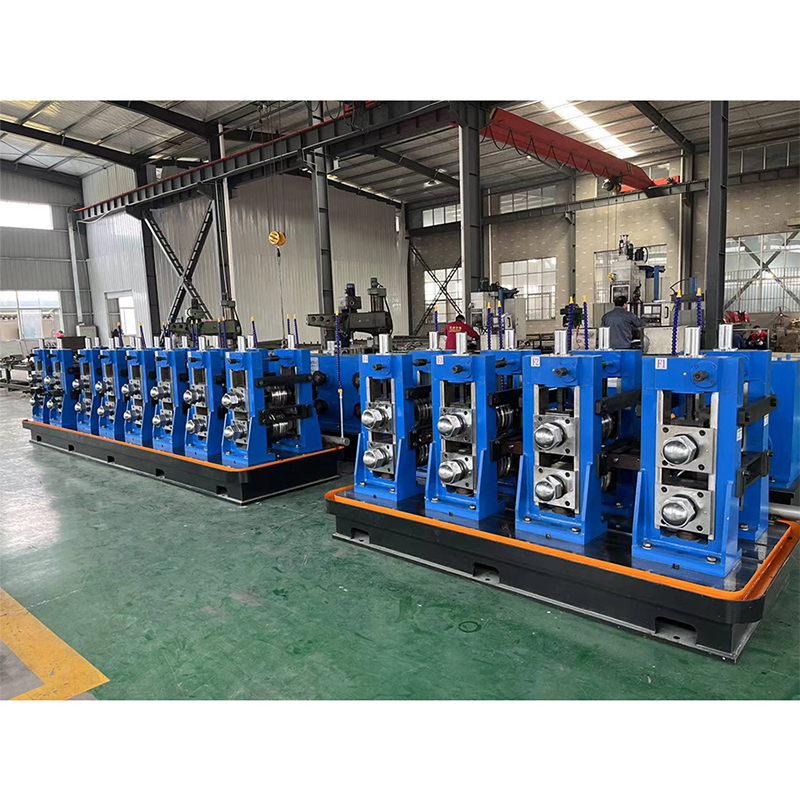
You’ve run heavy-gauge steel on your roll forming machine for years. Now a customer wants aluminum tube profiles – lighter, faster, but completely different. You think, “Same machine, same setup.” That’s a mistake. Here are three adjustments you must make before the first coil hits the entry guide.
Adjustment 1: Reduce Forming Pressure by 40–50%
Steel fights back. Aluminum doesn’t. If you keep the same roll gap and pressure, the roll forming machine will stretch, wrinkle, or even tear the aluminum strip. The rule: back off your top roll stands until the material just makes contact. Run a test piece. If you see scoring or pickup (aluminum smearing on the rolls), open the gap another 0.1mm. Unlike a steel tube mill machine that needs aggressive pressure to drive steel through, aluminum wants a gentle hug.
Adjustment 2: Change Lubrication – No More Heavy Oil
Your steel‑forming lubricant is too thick. It will mix with aluminum dust and create a sticky paste that clogs the roll forming machine rolls and marks the surface. Switch to a low‑viscosity, aluminum‑compatible forming fluid (often a light kerosene‑based or synthetic oil). It cools the metal, prevents pickup, and washes away debris. For aluminum tube production, some shops run dry with polished rolls – but only on short runs.
Adjustment 3: Slow Down the Line – At First
Aluminum feeds differently. It doesn’t have the stiffness of steel, so it can flutter between stand gaps. Start your roll forming machine at 50% of your normal steel speed. Watch the exit end. If the aluminum tube comes out straight and scratch‑free, gradually increase speed. But never run aluminum as fast as steel – its lower modulus means you’ll get twist and camber. A steel tube mill machine running 100 m/min might need to drop to 60 m/min for aluminum.
One more tip: clean every roll surface before switching. Steel dust embedded in the rolls will imprint on soft aluminum. Use a fine Scotch-Brite pad and solvent. Then run a sacrificial piece of aluminum through and inspect.
Aluminum isn’t steel. Treat your roll forming machine with respect, make these three adjustments, and you’ll produce beautiful aluminum tube without trashing your tooling or your scrap rate.